
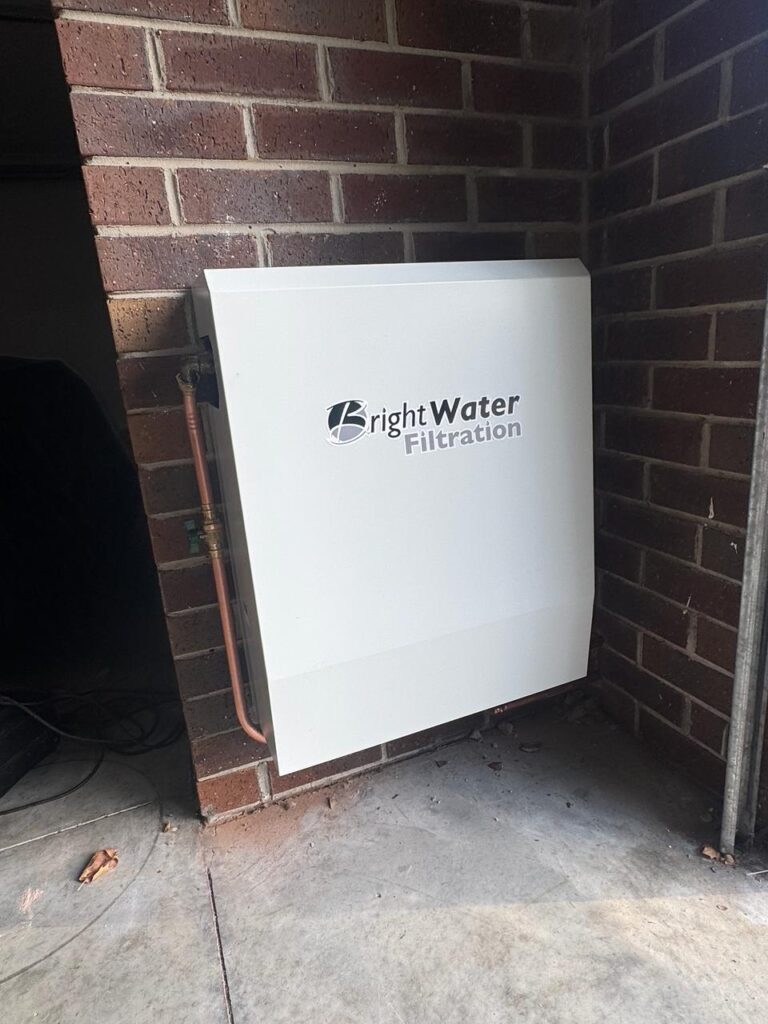
Whole house water filtration treats water at the point where it enters a property, before it reaches any individual tap, shower, or appliance. It’s a different approach to filtration than a single kitchen tap filter, and understanding exactly how it works, stage by stage, makes it easier to judge which type of system actually suits a given home.
This guide breaks down the filtration process itself: what each stage does, what it’s designed to address, and how systems typically differ from one another.
How a Whole House Water Filtration System Works
Once installed at the main water line, a whole house system passes incoming water through one or more filtration stages before it’s distributed to the rest of the property. The exact configuration depends on water quality, household size, and filtration goals, but most systems follow a broadly similar sequence.
Stage 1: Sediment Filtration
The first stage removes larger physical particles, such as dirt, sand, rust, and silt. This step matters beyond just water clarity: removing this material also protects the filtration stages that follow, since sediment can otherwise clog finer media and shorten the system’s working life.
Stage 2: Activated Carbon Filtration
Activated carbon works by adsorption, contaminants bind to the carbon’s porous surface as water passes through it. This stage is primarily responsible for reducing chlorine, chemical tastes, unpleasant odours, and various organic compounds, and it’s usually the stage that produces the most noticeable improvement in how water actually tastes and smells.
Stage 3: Advanced Filtration Media
Depending on the system, additional media can target more specific concerns: certain heavy metals, chloramine (a more stable alternative to chlorine used by some water authorities), volatile organic compounds, and scale-causing minerals. Not every system includes this stage, it depends on what the incoming water actually needs treated.
Stage 4: UV Water Treatment (Optional)
Some systems add ultraviolet sterilisation as a final stage. UV light neutralises microorganisms without introducing additional chemicals into the water, which makes it a useful addition for properties on tank or bore water, where microbial risk is more of a factor than it typically is with treated mains supply.
Types of Whole House Filtration Systems
Not every household needs the same configuration. Systems are generally built around one of a few core approaches:
- Carbon filtration systems — focused on chlorine, taste, and odour reduction.
- Sediment filtration systems — focused on removing larger particles, common in older properties or areas with ageing infrastructure.
- Multi-stage systems — combine several filtration technologies for broader treatment across chlorine, sediment, and other contaminants at once.
- UV treatment systems — add microbial protection, typically alongside another filtration stage rather than on their own.
- Custom-configured systems — built around a specific property’s water test results rather than a generic setup.
If you’re trying to decide between a whole house setup and a smaller, single-tap option, we’ve covered that decision separately in our whole house filter vs under-sink filter comparison, including cost, coverage, and which households tend to prefer each.
How Long Do Whole House Water Filters Last?
Filter lifespan depends on water quality, household size, water consumption, and the specific system’s design. Many filters require replacement every 6 to 12 months, though this varies. Sediment filters in areas with heavier particle content may need more frequent changes, while carbon stages in cleaner water supplies can sometimes run longer.
Skipping scheduled replacement doesn’t just reduce filtration performance, a saturated filter can eventually stop treating water effectively at all, so regular maintenance is what keeps the system doing its job.
Does Whole House Filtration Affect Water Pressure?
A properly sized and professionally installed system shouldn’t noticeably reduce water flow. The risk comes from undersized systems, a filter rated for a smaller household’s peak demand can create a bottleneck during high-usage periods (several showers and a washing machine running at once, for example).
This is why sizing a system correctly, based on household size, number of bathrooms, and peak usage, matters more than the filtration technology itself when it comes to maintaining pressure.
Signs Your Water Quality Might Warrant a Closer Look
A few practical signs tend to prompt people to look into filtration in the first place: a persistent chlorine smell, visible sediment or discolouration after heavy rain, unusually fast appliance scaling, or a noticeable chemical taste. None of these are emergencies, but they’re useful signals for figuring out which filtration stage would actually address the issue.
Understanding which stage handles which problem is the real value of knowing how these systems work, it turns “I don’t like my water” into a specific, solvable question about sediment, chlorine, hardness, or microbial content.