
If you have noticed white marks on your shower screen, residue around your taps, or deposits inside your kettle, you may have wondered whether Melbourne has hard water.
So, is Melbourne water hard or soft?
The simple answer is that Melbourne’s mains water is generally soft.
Melbourne Water’s published water quality data shows hardness levels ranging from approximately 9 to 38 mg/L across its listed major water supply sources. The exact level can vary depending on where your water comes from.
For most Melbourne households, this means hard water is unlikely to be a major concern. However, water hardness is only one part of the bigger water quality picture.
Let’s look at what water hardness actually means, why it varies across Melbourne, and what it could mean for your home.
Is Melbourne Water Hard or Soft?
Melbourne generally has soft mains water.
According to Melbourne Water’s published typical water analysis, hardness levels vary across its major supply sources:
- Upper Yarra: 9 to 14 mg/L
- Silvan: 10 to 27 mg/L
- Greenvale: 11 to 21 mg/L
- Cardinia: 16 to 25 mg/L
- Sugarloaf: 16 to 28 mg/L
- Tarago: 27 to 38 mg/L
This variation is important because there isn’t one exact water hardness figure that applies to every Melbourne home.
Your water can have slightly different characteristics depending on the source supplying your area. Even so, these figures indicate that Melbourne’s mains water is generally on the softer end of the hardness scale.
What Is Water Hardness?
Water hardness refers mainly to the amount of dissolved calcium and magnesium in water.
These minerals occur naturally. As water moves through soil and rock, it can pick up minerals along the way.
Water containing relatively high concentrations of calcium and magnesium is described as hard water. Water with lower concentrations is considered soft.
Calcium and Magnesium in Water
Calcium and magnesium in water are not automatically signs of contamination.
They are naturally occurring minerals, and their concentration helps determine the hardness of the water.
This is an important distinction because people sometimes associate “hard water” with “bad water”. They are not the same thing.
Hardness describes a particular characteristic of water. It does not, by itself, tell you whether the water is safe to drink.
How Is Water Hardness Measured?
Water hardness is commonly measured in milligrams per litre (mg/L) and expressed as calcium carbonate equivalent.
In simple terms, a higher number generally means harder water.
Melbourne’s figures can vary between water sources, which is why homeowners looking for information about their own property should avoid relying on a single citywide number.
Why Is Melbourne’s Water Generally Soft?
One reason Melbourne is known for relatively soft water is the nature of its water sources and catchments.
Melbourne’s drinking water comes from several reservoirs and supply sources. Each source can have a slightly different mineral profile.
For example, Melbourne Water reports typical hardness of 9 to 14 mg/L for Upper Yarra, compared with 27 to 38 mg/L for Tarago.
Both are part of Melbourne’s wider water supply system, but their hardness levels are not identical.
This helps explain why two households in different parts of Melbourne may notice small differences in their water.
Does Water Hardness Vary Across Melbourne?
Yes, it can.
Melbourne is supplied through a large water network, and different areas can receive water from different sources.
Water quality can also vary over time as supply arrangements change.
If you want to know the water hardness at your particular property, the best starting point is your local water supplier’s current water quality information.
For homeowners trying to solve a specific problem, testing the water at the property can provide an even clearer picture.
What Are the Signs of Hard Water in a Home?
Melbourne’s mains water is generally soft, but it is still useful to understand what hard water typically looks like around a home.
Mineral Deposits and Scale
One of the most recognisable signs associated with harder water is mineral buildup.
You might see deposits around:
- taps
- showerheads
- shower screens
- kettles
- hot water equipment
- fixtures that regularly come into contact with water
When water evaporates, some of its dissolved minerals can remain behind on the surface.
The more mineral-rich the water is, the more noticeable this buildup may become.
Soap and Shampoo Lather
Hard water can also affect how easily soap and shampoo lather.
People living in areas with much harder water may find that they need more soap to create the same amount of lather.
This tends to be less of an issue where the water is naturally soft.
Kettles, Taps and Household Appliances
Harder water can contribute to mineral deposits inside kettles, hot water systems and other appliances that regularly heat water.
Over time, significant scale buildup can become more than a cosmetic issue.
However, seeing white residue around your taps or inside a kettle does not automatically mean your Melbourne home has hard water.
There may be other factors involved.
If Melbourne Has Soft Water, Why Do I Still See White Marks or Residue?
This is a common source of confusion.
If Melbourne has relatively soft water, why can you still get white spots on shower glass or marks around a tap?
The answer is that soft water is not mineral-free water.
Even relatively soft water can contain dissolved minerals. When droplets dry on glass, stainless steel or another surface, some dissolved material can be left behind.
There are other possible factors too.
Your property’s plumbing, hot water system, cleaning products and local water characteristics may all affect what you notice around the home.
So, white marks should not automatically be treated as proof that you have a serious hard water problem.
If deposits are unusually heavy or keep returning, checking your local water information or testing the water can give you a much better answer than judging hardness by appearance alone.
Is Hard Water the Same as Poor Water Quality?
No.
Water hardness and overall water quality are two different things.
Hardness mainly relates to minerals such as calcium and magnesium.
It does not tell you everything about other characteristics of your water, such as:
- chlorine
- sediment
- taste
- odour
- colour
- other substances that may be present
This is why describing water as “soft” does not necessarily answer every question a homeowner may have about their household water.
The opposite is also true. Hard water should not automatically be described as contaminated water.
If your concern is whether Melbourne tap water is safe to drink, that is a separate question from water hardness. Our guide to Melbourne tap water safety looks at that topic in more detail.
Water Filtration vs Water Softening: What’s the Difference?
Water filtration and water softening are often confused, but they are designed to address different problems.
Understanding the difference can help you avoid choosing a treatment system that does not match what you actually want to improve.
What Does a Water Filter Do?
A water filter is designed to reduce specific substances depending on the type of filter and media being used.
For example, different filtration stages may be designed to address sediment, rust, chlorine, unpleasant tastes or odours.
Not every water filter removes the same things, so it is important to look at what a particular system is actually designed to treat.
What Does a Water Softener Do?
A conventional water softener is specifically intended to deal with hardness minerals, particularly calcium and magnesium.
Its job is different from general water filtration.
This distinction is especially relevant in Melbourne because mains water is already generally soft.
If your actual concern is chlorine taste, sediment or another water characteristic, treating hardness may not solve the problem you are experiencing.
Do Melbourne Homes Need a Water Softener?
For most Melbourne homeowners on mains water, it makes sense to first establish whether excessive hardness is actually present.
Melbourne Water’s published figures show relatively low hardness levels across its major water supply sources.
That means there is little value in assuming that every Melbourne property needs a water softener.
If you are dealing with persistent scale, unusual deposits or another issue that you suspect is related to hardness, check your local supplier’s water quality information first.
You can also have your water tested if you want information specific to your property.
Homes using bore water, groundwater or another private water source should be considered separately because their mineral levels can be very different from Melbourne’s mains supply.
Do You Still Need Water Filtration If Melbourne’s Water Is Soft?
Soft water and filtered water are not the same thing.
A home can receive soft water and still have other water characteristics that the household may want to address.
For example, someone might be concerned about sediment entering the home, chlorine taste or odour, rather than calcium and magnesium.
This is where it becomes important to identify the actual issue before deciding on a treatment method.
If the concern affects water throughout the property rather than just one drinking tap, you may want to learn how whole house water filtration for Melbourne homes works and what different filtration stages are designed to address.
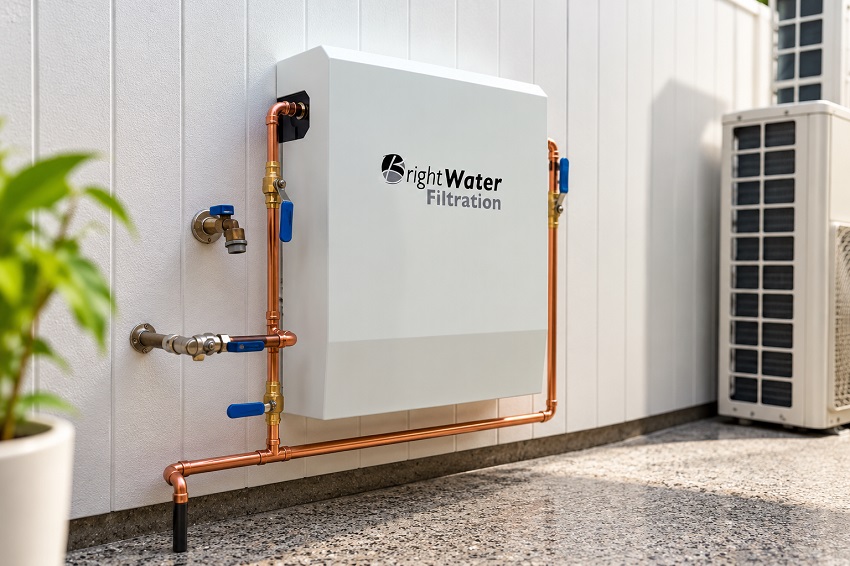
The goal should not be to install filtration simply because Melbourne has hard or soft water. You can also explore Bright Water Filtration for an overview of whole-home water filtration options.
It should be to understand your water first and then choose a solution that matches what you actually want to improve.
How Can You Check the Water Hardness at Your Melbourne Home?
If you want to know more about the water coming into your own property, start with your local water supplier.
Water suppliers publish water quality information that can help you understand the typical characteristics of the water supplied to your area.
For a more property-specific answer, water testing may be useful.
Testing can make sense if:
- you are seeing persistent deposits or unusual residue
- you use a private water source
- your water seems to have changed
- you are trying to identify a specific water problem
- you are considering a filtration or treatment system
The important part is to avoid guessing.
White marks do not automatically mean hard water. An unusual taste does not automatically mean a hardness problem either.
Knowing what is actually present in your water makes it easier to decide what, if anything, needs to be treated.
So, Is Melbourne Water Hard or Soft?
For most households connected to Melbourne’s mains supply, the water is generally soft.
Melbourne Water’s published typical analysis shows hardness levels ranging from approximately 9 to 38 mg/L across its listed major supply sources.
The exact figure can differ depending on where your water comes from, so there is no single number that applies to every Melbourne property.
More importantly, water hardness should not be confused with overall water quality.
If you are experiencing a particular issue with your household water, such as unusual taste, odour, sediment or persistent residue, identify the cause before choosing a treatment system.
Sometimes the issue may involve hardness. Sometimes it may have nothing to do with hardness at all.
Frequently Asked Questions About Melbourne Water Hardness
Is Melbourne tap water hard or soft?
Melbourne’s mains water is generally considered soft. Melbourne Water reports typical hardness ranges of approximately 9 to 38 mg/L across its listed major water supply sources.
What is the water hardness level in Melbourne?
There is no single hardness figure for all of Melbourne. Melbourne Water reports different ranges for different supply sources, from around 9 to 14 mg/L at Upper Yarra to 27 to 38 mg/L at Tarago.
Does Melbourne have hard water in every suburb?
No. Melbourne generally has soft mains water, and the exact characteristics can vary depending on the source supplying a particular area.
Why do I get white marks if Melbourne water is soft?
Soft water can still contain dissolved minerals. When water droplets dry, some dissolved material can remain on the surface. Plumbing, hot water systems and other household factors can also influence the residue you see.
Does a water filter soften hard water?
Not necessarily. Water filtration and water softening are different processes. A conventional water softener specifically targets hardness minerals, while filtration systems are designed around other substances depending on the filter media being used.
Do I need a water softener in Melbourne?
Melbourne mains water is generally soft, so you should first confirm that hardness is actually causing a problem before considering a water softener.
Is soft water the same as filtered water?
No. Soft water simply has relatively low concentrations of hardness minerals such as calcium and magnesium. Filtered water has passed through a filtration process designed to reduce particular substances. Water can be naturally soft without being filtered at the household level.