Have you ever filled a glass of water from your kitchen tap and noticed that it tastes slightly different from the day before? Sometimes it tastes completely normal, while other times you might notice a stronger aftertaste, a faint smell or a change in flavour.
If you’ve experienced this, you’re probably wondering why Melbourne tap water tastes different at different times.
There isn’t always one simple explanation. Water temperature, changes in supply sources, household plumbing and the amount of time water spends sitting in pipes can all influence how tap water tastes.
Melbourne’s drinking water is regularly monitored to meet applicable water quality requirements. However, that doesn’t mean the taste will always be identical in every home or at every time of day.
Understanding what can affect the taste of your water is a useful first step towards identifying whether the change is temporary, related to your plumbing or something worth investigating further.
Why Does Melbourne Tap Water Taste Different at Different Times?
Melbourne tap water can taste different because of changes in water temperature, supply conditions, disinfectant levels and household plumbing.
Water that has been sitting in pipes overnight may taste different from water that has just entered the property. Similarly, water served cold from the fridge may taste different from the same water at room temperature.
Sometimes the difference is subtle. You may only notice it when drinking plain tap water rather than using it for tea, coffee or cooking.
Common factors that can influence tap water taste include:
- Changes in the water source supplying your area
- Water temperature and seasonal conditions
- Water remaining in household pipes for extended periods
- Plumbing materials and fixtures
- Disinfectant taste or odour
- Conditions within the property’s internal plumbing
Not every change in taste indicates a water quality problem. However, a sudden, strong or persistent change should not be ignored.
The important thing is to understand what has changed and whether the issue is affecting only your home or other properties nearby.
Can Melbourne’s Water Supply Source Affect Taste?
Yes. Melbourne receives drinking water from multiple catchments, reservoirs and supply sources.
These sources can have different natural characteristics, including variations in mineral content and other water quality parameters.
Depending on supply arrangements, the characteristics of water delivered to an area may change over time.
For example, water from one reservoir may have a slightly different mineral composition from water supplied through another part of the network.
This doesn’t automatically mean one source is better or safer than another. It simply means that drinking water is not necessarily identical across every supply source.
Melbourne Water regularly monitors water quality and publishes information about the characteristics of water from its major supply sources.
You can explore the official Melbourne Water water quality testing information to understand how different water quality parameters are measured and reported.
If you notice a persistent change in your tap water, your local water retailer is generally the best first contact for information about your property’s supply.
Does Water Temperature Change How Tap Water Tastes?
Temperature can influence how we experience the taste and smell of drinking water.
You might notice that a glass of cold water tastes fresher or more pleasant than water left at room temperature.
This doesn’t necessarily mean the chemical composition of the water has changed significantly.
Temperature can affect how noticeable certain tastes and odours are. People may also perceive the same water differently depending on whether it is chilled, warm or at room temperature.
Why Does Tap Water Taste Different During Summer?
During warmer weather, the temperature of water in household plumbing may rise, particularly where pipes are exposed to heat.
Water that has been sitting in warmer pipes may taste different from cooler water.
This can be especially noticeable when you first turn on a tap after it has not been used for several hours.
If the water returns to its usual taste after the cold supply has run briefly, temperature or water standing in the plumbing may be contributing factors.
However, temperature alone should not be assumed to explain a strong or unusual taste.
Does Refrigerating Tap Water Change Its Taste?
Chilling tap water can make certain tastes and odours less noticeable.
Some people prefer refrigerated tap water because it feels more refreshing, particularly during Melbourne’s warmer months.
However, refrigeration does not make unsafe water safe to drink or remove every substance that might be affecting its taste.
If you are concerned about a sudden or persistent change, cooling the water should not replace investigating the cause.
Can Household Plumbing Affect Water Taste?
Yes. The plumbing inside your home can influence the taste of water at the tap.
Even when the water entering your property meets drinking water standards, its characteristics can be affected by conditions within the building.
Factors worth considering include the age and condition of the plumbing, the materials used in pipes and fittings, and how frequently particular taps are used.
For example, a tap in a guest bathroom that is rarely used may produce water that tastes different from the kitchen tap used throughout the day.
If only one tap has an unusual taste, the issue may be related to that fixture or the plumbing supplying it.
If every cold-water tap has the same unusual taste, the cause may be more widespread.
Can Older Pipes Affect Water Taste?
Older plumbing materials and fittings can sometimes influence water characteristics.
A metallic taste, for example, may be associated with contact between water and certain plumbing materials.
However, taste alone cannot identify which material or substance is responsible.
If you notice a persistent metallic taste, unusual colour or another concerning change, contact your water supplier or a qualified plumber for advice.
For homes with older plumbing, professional assessment may help determine whether the issue originates within the property.
Why Does Tap Water Taste Different First Thing in the Morning?
Water can remain inside household pipes for several hours overnight.
During this period, it stays in contact with the internal plumbing rather than moving through the system.
As a result, the first water drawn from a tap in the morning may taste slightly different from water used later in the day.
You might also notice a difference after returning home from a holiday or after leaving a particular tap unused for an extended period.
If the water tastes unusual only when a tap is first opened, this can provide a useful clue when investigating the cause.
For routine drinking and cooking, use water from the cold tap rather than the hot-water system.
If the taste remains unusual, is accompanied by discolouration or causes concern, contact your water supplier instead of assuming that running the tap will solve the problem.
What If Melbourne Tap Water Has a Chlorine Taste or Smell?
Some Melbourne residents notice a chlorine-like taste or smell in their tap water.
Chlorine is used in drinking water treatment and distribution to help control microorganisms.
Its taste or smell can be more noticeable under certain conditions, but a noticeable chlorine odour does not automatically mean the water is unsafe.
Similarly, the absence of a chlorine smell does not prove that water is free from other substances.
If the main issue you are experiencing is a strong chlorine smell, we have covered this in more detail in our guide: Why Does My Melbourne Tap Water Smell Like Chlorine?.
That article focuses specifically on chlorine-related concerns, while this guide looks at the broader reasons household tap water can taste different.
If the chlorine taste or smell is unusually strong, develops suddenly or persists, contact your water supplier for advice.
Does Melbourne’s Soft Water Affect Its Taste?
Melbourne’s mains water is generally considered soft, although hardness varies depending on the water source.
Water hardness refers mainly to the concentration of dissolved calcium and magnesium.
Mineral content can influence how water tastes, but hardness is only one characteristic of drinking water.
For example, two water sources can both be classified as soft while having slightly different mineral profiles.
This is one reason water from different locations may not taste exactly the same.
However, a change in taste should not automatically be blamed on hard water.
If you’re interested in Melbourne’s mineral levels, read our previous article, Is Melbourne Water Hard or Soft? What It Means for Your Home.
It explains Melbourne water hardness and why relatively soft water can still contain naturally occurring minerals.
When Should You Be Concerned About a Change in Tap Water Taste?
A minor difference in taste is not always a sign of a problem.
However, some changes deserve closer attention, particularly when they appear suddenly or continue over time.
Consider contacting your water supplier if:
- Your tap water develops a sudden, strong or unusual taste
- The water has a persistent chemical, metallic or other unfamiliar odour
- You notice unexpected discolouration or particles
- The change affects multiple taps throughout your home
- Nearby households are experiencing a similar issue
- The problem continues without an obvious explanation
If your water looks, smells or tastes significantly unusual, avoid using it for drinking or food preparation until you have received appropriate advice.
You should also follow any drinking water notices issued by your local water supplier.
Melbourne’s drinking water is managed within Victoria’s drinking water regulatory framework, but individual concerns should still be investigated.
For a broader explanation of drinking water safety, you can also read our article on whether Melbourne tap water is safe to drink.
Can Water Filtration Improve the Taste of Melbourne Tap Water?
Depending on what is causing the taste, an appropriately selected water filtration system may help.
Different filtration technologies are designed to reduce different substances.
For example, activated carbon filtration is commonly used to reduce chlorine-related taste and odour. Sediment filtration, on the other hand, is designed to capture certain suspended particles.
These filtration methods do not perform the same function, and no single system should be assumed to address every water quality concern.
This is why understanding the source of an unusual taste is important before choosing a filtration system.
What About Whole House Water Filtration?
Some households want to address water characteristics at multiple outlets rather than treating only one drinking-water tap.
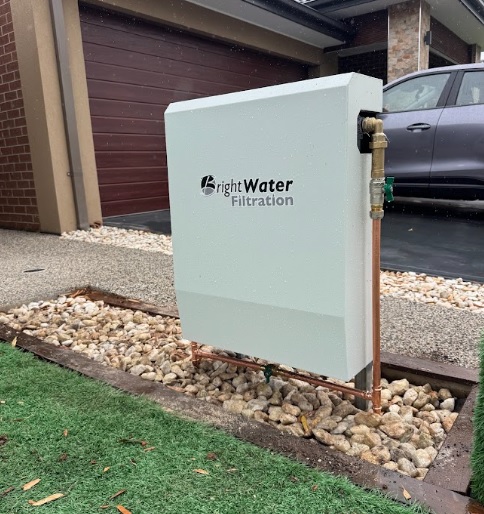
A whole house filtration system is generally installed at the point where water enters the property, allowing incoming water to pass through the system before reaching various household outlets.
The substances reduced depend on the system’s design and filtration media.
For homeowners considering this approach, Bright Water Filtration provides information about whole house water filtration options for Melbourne homes.
It is important to remember that filtration is not automatically necessary simply because water tastes slightly different on occasion.
The most appropriate approach depends on the actual water characteristics, the household’s concerns and the treatment capabilities of the system being considered.
What About Homes in Other Australian Cities?
Water sources and treatment arrangements vary between Australian cities, so Melbourne’s water characteristics should not be assumed to apply elsewhere.
For example, homeowners in Queensland may be dealing with different local supply conditions.
If you are researching treatment options for a Brisbane property, you can explore water filtration options for Brisbane homes separately.
The important point is that water treatment decisions should be based on local conditions and the specific issue being addressed.
For more information about available filtration systems and services, visit Bright Water Filtration.
Practical Ways to Check Why Your Tap Water Tastes Different
If you have noticed a change in taste, a few simple observations can help you explain the problem more clearly to your water supplier or plumber.
1. Check whether the change affects one tap or several.
If the issue occurs at only one outlet, the fixture or nearby plumbing may be involved. If it affects multiple cold-water taps, the cause may be broader.
2. Notice when the taste changes.
Does it happen first thing in the morning, after a tap has not been used, or throughout the day?
The timing can provide useful clues.
3. Compare cold water at different times.
Notice whether the taste is different after the tap has been used normally compared with the first water drawn after a long period of inactivity.
Avoid using hot tap water as a substitute for cold drinking water.
4. Check for other changes.
Look for unusual colour, particles or odours.
A taste change accompanied by other unusual characteristics may need further investigation.
5. Review local water quality information.
Your water retailer can provide information about the drinking water supplied to your area and advise whether there are any known local issues.
6. Seek advice if the problem continues.
If the taste remains unusual, contact your water supplier. A qualified plumber may also be able to assess problems related to internal plumbing.
Water testing may be appropriate where the cause remains unclear.
The aim is to identify the issue before deciding whether treatment, plumbing work or another response is needed.
Final Thoughts
Melbourne tap water can taste different at different times for several reasons.
Water temperature, supply sources, household plumbing and water standing in pipes can all influence the taste you notice.
In many cases, small variations may not indicate a serious issue. However, a sudden, strong or persistent change deserves attention.
Rather than assuming every unusual taste means the water is contaminated, start by checking when the change occurs, which taps are affected and whether there are any other unusual characteristics.
If you remain concerned, contact your local water supplier for guidance.
And if you are considering water filtration to address a particular taste or odour concern, make sure the filtration method is suitable for the substances you actually want to reduce.
Understanding your water is always a better starting point than choosing a system based on guesswork.
Frequently Asked Questions
Why does Melbourne tap water taste different sometimes?
Melbourne tap water can taste different because of water temperature, supply variations, disinfectant taste or odour, and conditions within household plumbing. The cause depends on the property and the circumstances.
Why does my tap water taste different in the morning?
Water may remain inside household pipes overnight. Extended contact with plumbing materials and changes in water temperature can influence its taste. If the change is strong or persistent, seek advice from your water supplier.
Can Melbourne tap water taste different in summer?
Yes. Warmer conditions can affect water temperature, including water sitting in household pipes. Temperature can influence how noticeable certain tastes and odours are.
Does chlorine change the taste of tap water?
Chlorine can produce a recognisable taste or odour. It is used in drinking water treatment to help control microorganisms. If the taste becomes unusually strong or changes suddenly, contact your water supplier.
Is it normal for tap water to taste different after a holiday?
Water that has remained in household plumbing for an extended period may taste different when taps are first used again. If the water has an unusual colour, smell or persistent taste, seek advice rather than assuming the change is harmless.
Can a water filter improve tap water taste?
Some filtration systems can reduce particular substances that affect taste or odour. For example, activated carbon is commonly used for chlorine-related taste and odour reduction. The results depend on the filter technology and the actual cause of the problem.
Is Melbourne tap water safe if it tastes different?
A difference in taste does not automatically mean water is unsafe, but taste alone cannot confirm safety either. If the change is sudden, strong, persistent or accompanied by unusual colour or odour, contact your water supplier for advice.